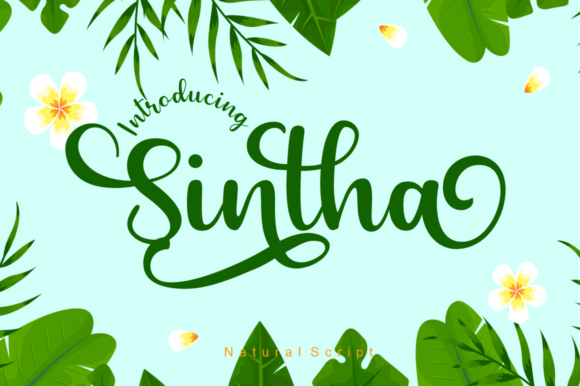
Sintha: A Handwritten Font for Creative Brands
There I was, staring at a blank brand board, trying to find the right visual voice for a new artisanal café. The client wanted something warm, inviting, and slightly playful—something that felt like a handwritten note from a friend. I had a few fonts in mind, but nothing quite hit the mark until I tried Sintha.
What Is Sintha?
Sintha is a beautiful handwritten font that brings a sense of personality and warmth to any design. It’s perfect for logos, greeting cards, calendars, wedding invitations, t-shirts, and more. The font has a soft, flowing style that feels both elegant and approachable. Its natural strokes and subtle variations make it feel authentic, as if it were written by hand rather than generated by a computer.
Testing Sintha in Real Projects
I first tested Sintha on a logo concept for the café. I paired it with a clean sans-serif font for balance, and it worked surprisingly well. The contrast between the two gave the brand a modern yet personal feel. On a business card, Sintha added a touch of sophistication without overwhelming the design. It looked great on a website header too, where it caught the eye without being too distracting.
When I placed Sintha on a packaging mockup, it brought a handmade quality to the product. The font felt right for a small-batch coffee brand that prided itself on craftsmanship. On social media layouts, it added a friendly tone that resonated with the target audience. Whether it was a poster, flyer, or editorial piece, Sintha maintained its charm and readability.
Strengths and Limitations
Sintha shines as a display or headline font. It’s ideal for short phrases, logos, and branding elements where visual impact matters. However, it’s not the best choice for long body text or formal corporate use. In smaller sizes, the details can get lost, making it less readable. For that reason, it’s best used as an accent or decorative font rather than a primary typeface.
One thing I appreciated about Sintha is its PUA encoding, which allows access to all the glyphs without needing special software. This makes it easy to use across different platforms and projects. The font also includes alternates, swashes, and ligatures that add variety and customization options for designers.
Pairing Sintha with Other Fonts
When pairing Sintha with other fonts, I found that it works well with serif and sans-serif typefaces. A classic serif like Georgia or Baskerville can provide a strong foundation, while a modern sans-serif like Montserrat or Lato adds contrast. For a more cohesive look, pairing it with another script font can create a layered, dynamic effect.
For a creative studio identity project, I used Sintha alongside a bold sans-serif for headings and a light serif for body text. The combination gave the brand a balanced, professional look while maintaining a personal touch. It’s important to test pairings in real contexts to see how they work together visually.
Best Uses for Sintha
Sintha is a versatile font that fits well in various design applications. It’s excellent for logos, especially for brands that want to convey a sense of authenticity and creativity. It also works well for packaging design, where its handwritten style can make products stand out on the shelf.
On a website header, Sintha adds a unique flair that can help a brand stand out. In social media graphics, it gives a friendly, approachable vibe that resonates with audiences. For a handmade shop branding project, it’s the perfect choice to reflect the craft and care behind the products.
Practical Tips for Using Sintha
Before using Sintha in final client work, I recommend testing it in different sizes and contexts. Print it out on a business card or sign to see how it looks in real life. Also, check how it appears on screens, especially mobile devices, where legibility is key.
It’s also important to review the commercial licensing terms before using Sintha in client projects. Make sure you have the proper rights for web use, print, and digital products. This is especially important for online shops, print-on-demand services, and templates.
Overall, Sintha is a premium font that offers a unique, handwritten style perfect for creative branding. Whether you’re designing a logo, packaging, or social media assets, Sintha can add a personal touch that sets your work apart.